Michigan’s Long-Advertised Fall From Grace.
For years, the University of Michigan sold a rare story in college sports: elite athletics built on elite values. A place where you could win big without losing your soul. They weren’t just another powerhouse—they were the one with a conscience. But the last three years have shattered that identity. Not with one scandal, but with an entire cascade.
Mel Pearson pushed players to lie and retaliated against dissent. Jim Harbaugh oversaw recruiting violations and the most brazen sign-stealing operation modern college football has seen. Connor Stalions became the poster child of rogue ambition. Juwan Howard swung on a coach during a handshake line and again at his own staff in practice. Matt Weiss was federally indicted for hacking thousands of university accounts.
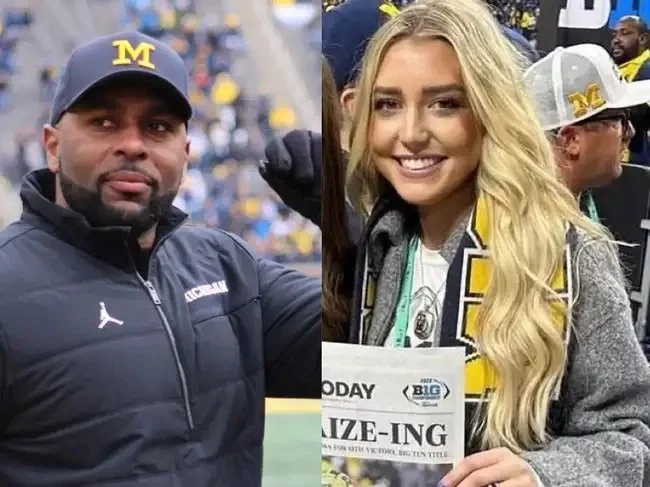
And now Sherrone Moore—fired for an inappropriate relationship with a staffer (allegedly covered up with hush money and her subsequent termination), then arrested days later on assault and stalking allegations.
This isn’t coincidence. It’s culture. And Moore’s collapse might be the clearest window yet into how far Michigan has drifted. Before he entered Jim Harbaugh’s orbit, Moore wasn’t a prodigy. He wasn’t a destined head coach. He was a grinder—respected, steady, anonymous. Then Michigan elevated him into an ecosystem that was already frayed, already compromised, already operating from a place of adrenaline and defiance.
A culture shaped by the belief that rules are flexible for winners. That scrutiny is evidence of jealousy. That being “Michigan” is its own shield. When you spend long enough inside a system that treats accountability as optional, you don’t start questioning the system—you start assuming the rules don’t apply to you either. That’s the undercurrent nobody wants to name. Not fans. Not media. Not even the administration.
And the timeline matters. Because Michigan didn’t fire Moore when they learned of the allegations. Michigan fired Moore when they lost to Ohio State. Technically, the school knew months ago. Complaints were raised. HR was alerted. Compliance documented everything. But Michigan’s leadership didn’t act until the smoking gun conveniently surfaced—11 days after their biggest loss of the season.
That timing isn’t procedural. It’s revealing. It shows you exactly how the department now thinks in competitive calculus:
“We’ll deal with it… but not until the season is out of reach.”
“We’ll act… but only when the competitive risk has passed.”
“We’ll protect integrity… but only once the scoreboard says our goals are dead.”
This is what invincibility culture does. It shapes athletes. It shapes staff. And eventually, it shapes the people in suits who are supposed to be the adults in the room. Michigan didn’t just have a misconduct problem. It had a self-protection problem.
The same logic that allowed Pearson to fester, Harbaugh to defy, Stalions to improvise, Howard to explode, and Weiss to breach—also allowed leadership to slow-roll Moore’s situation until it was strategically convenient. This isn’t the moral high ground Michigan once claimed. This is crisis management dressed up as principle.
And it leaves one unavoidable conclusion: Michigan didn’t just lose its way—it forgot it ever had one.
Moore’s actions are his own responsibility. Nothing excuses them. But context matters. He rose through a system that stopped emphasizing emotional regulation, accountability, and human development, and started prioritizing winning, optics, and silence.
When you reward armor instead of honesty, adrenaline instead of awareness, and victories instead of values, you eventually get a department full of people who believe invincibility is part of the job description.
Michigan can rebuild. But the rebuild won’t start with a new coach or a new slogan. It starts with a nervous-system reset of the entire department. With humility. With the courage to name what really happened. With leaders who understand that win-at-all-costs always costs more than anyone thinks.
Michigan once knew the difference between high standards and high arrogance. Somewhere along the way, they traded one for the other.
And now the bill has come due.
—
If you’re an athletic director, head coach, assistant coach, strength coach, sport psychologist, or anyone in a college or professional program who feels the weight of this moment, reach out. I work with leaders—not just athletes—on the exact thing Michigan forgot: staying human in an inhuman system. Pressure doesn’t have to become pathology. Winning doesn’t have to cost your soul. Whether you want to prevent the next cascade, rebuild trust in a program that’s wobbling, or simply make sure you’re the adult in the room who never lets optics outrank people—I can help.